Let’s talk fertilizer.
Why We Only Use Organic Fertilizers on Our Fields — And Why It Matters
When you pick up a Cow Creek Meat product, you might not think much about what happened in the soil months before harvest. But for us, that soil is everything. It feeds our crops, our pastures, and ultimately the animals that graze and grow here. It's where our commitment to organic farming begins and it's why we made the decision, years ago, to never use conventional synthetic fertilizers on our fields.
Here's what that means, why we do it, and why we believe it makes a difference for you, for our land, and for the future.
What's the Difference Between Organic and Conventional Fertilizers?
Conventional fertilizers are synthetically manufactured products, typically derived from industrial chemical processes, designed to deliver concentrated doses of nutrients like nitrogen, phosphorus, and potassium directly to plants. They work fast, and they work visibly. That's a big part of why they became so popular in modern agriculture.
Organic fertilizers, by contrast, come from natural sources: compost, aged animal manure, bone meal, kelp, cover crops, and other biological materials. They feed the soil as much as the plant, working more slowly and in harmony with the natural ecosystem beneath our feet.
That difference, feeding the soil versus feeding the plant, is at the heart of why we choose organic every time.
Why We Never Use Conventional Fertilizers
1. Soil Health is Long-Term Wealth
Healthy soil isn't just dirt. It's a living, breathing ecosystem filled with billions of microorganisms, fungi, earthworms, and other life forms that work together to make nutrients available to plants, retain water, and build structure. Synthetic fertilizers, used over time, can disrupt this balance, reducing microbial diversity, acidifying the soil, and creating a dependence on external inputs just to maintain yields.
Organic fertilizers do the opposite. They feed the microbes. They build organic matter. Over time, our soil gets richer, more resilient, and more productive, not depleted.
2. What Goes Into the Soil Can End Up in Your Food
Our crops absorb what's in the ground. That's the whole point. But it also means that what we put into our fields matters deeply. Synthetic fertilizers can leave behind nitrate residues that make their way into crops and, eventually, into the people who eat them. By staying organic, we're confident that what we grow is as clean as we can make it.
3. Supporting a Bigger Picture
We're not farming in a vacuum. Every choice we make on our land ripples outward, into the air, the water, the communities around us, and the climate. Synthetic fertilizer production is energy-intensive and relies heavily on fossil fuels, particularly for nitrogen fertilizers made through the Haber-Bosch process. Organic farming keeps us out of that chain and reduces our overall carbon footprint.
What We Use Instead
We're not just avoiding something, we're actively building something better. Our approach to fertilizing our fields combines several practices that work together as a system.
Locally Sourced Gypsum
One of our key soil amendments is gypsum, a naturally occurring mineral we source from close to home. Gypsum (calcium sulfate) does a remarkable job of improving soil structure, particularly in heavier soils, by helping to break up compaction and improve drainage. It also delivers calcium and sulfur, two nutrients that are easy to overlook but essential for healthy plant growth.
We apply gypsum to our grazing pastures as well as the fields where we grow the crops that feed our animals, so its benefits flow through the whole farm, not just one part of it.
Compost and Natural Amendments
Rounding out our approach is compost and other organic matter that feeds the living ecosystem beneath the surface. Healthy soil is alive and full of microorganisms, fungi, and biological activity that make nutrients available to plants in ways no synthetic product can fully replicate. Our goal is always to feed that ecosystem, and let it feed our crops in return.
These practices aren't shortcuts. They take more planning, more observation, and more patience than simply spreading synthetic fertilizer. But the results in the quality of our soil, the health of our animals, and the integrity of what we grow are worth every bit of that effort.
Crop Rotation — Letting Plants Do the Work
One of the most powerful tools in our farming system costs nothing and has been used for thousands of years: rotating what we plant and where we plant it. Different crops take different things from the soil and some give back. Legumes, for example, fix atmospheric nitrogen directly into the ground, naturally replenishing one of the most important nutrients for grain crops. Other plants draw up deep minerals, add organic matter as they break down, or help suppress the pest and disease cycles that build up when the same crop grows in the same place year after year.
By carefully planning which crops follow which, we can let the land restore itself between cycles. It's slower and more complex than simply adding synthetic fertilizer to compensate for depleted soil but the result is ground that gets better over time, not worse.
Growing Our Own Animal Feed
Speaking of feeding our animals, we grow it all ourselves. The grains we harvest from our own fields go directly into feeding our livestock, which means we have no need to purchase outside feed. That matters more than it might seem at first glance. It means we know exactly what our animals are eating, because we grew it. There are no unknown inputs, no supply chain surprises, and no compromises. It's a closed loop we're genuinely proud of.
Our Commitment to You
When you support Cow Creek Meat, you're investing in a way of growing food that respects the land it comes from and the people it feeds. Every practice on our farm, from the gypsum we spread on our pastures to the grain we harvest to feed our own animals, is connected. It's a system built on integrity from the ground up.
Our fields have never seen a bag of synthetic fertilizer, and they never will. That's a promise we're proud to keep.
Want to learn more about how we raise our animals and care for our land? Follow us on Instagram @CowCreekMeat for an inside look at life on the farm.
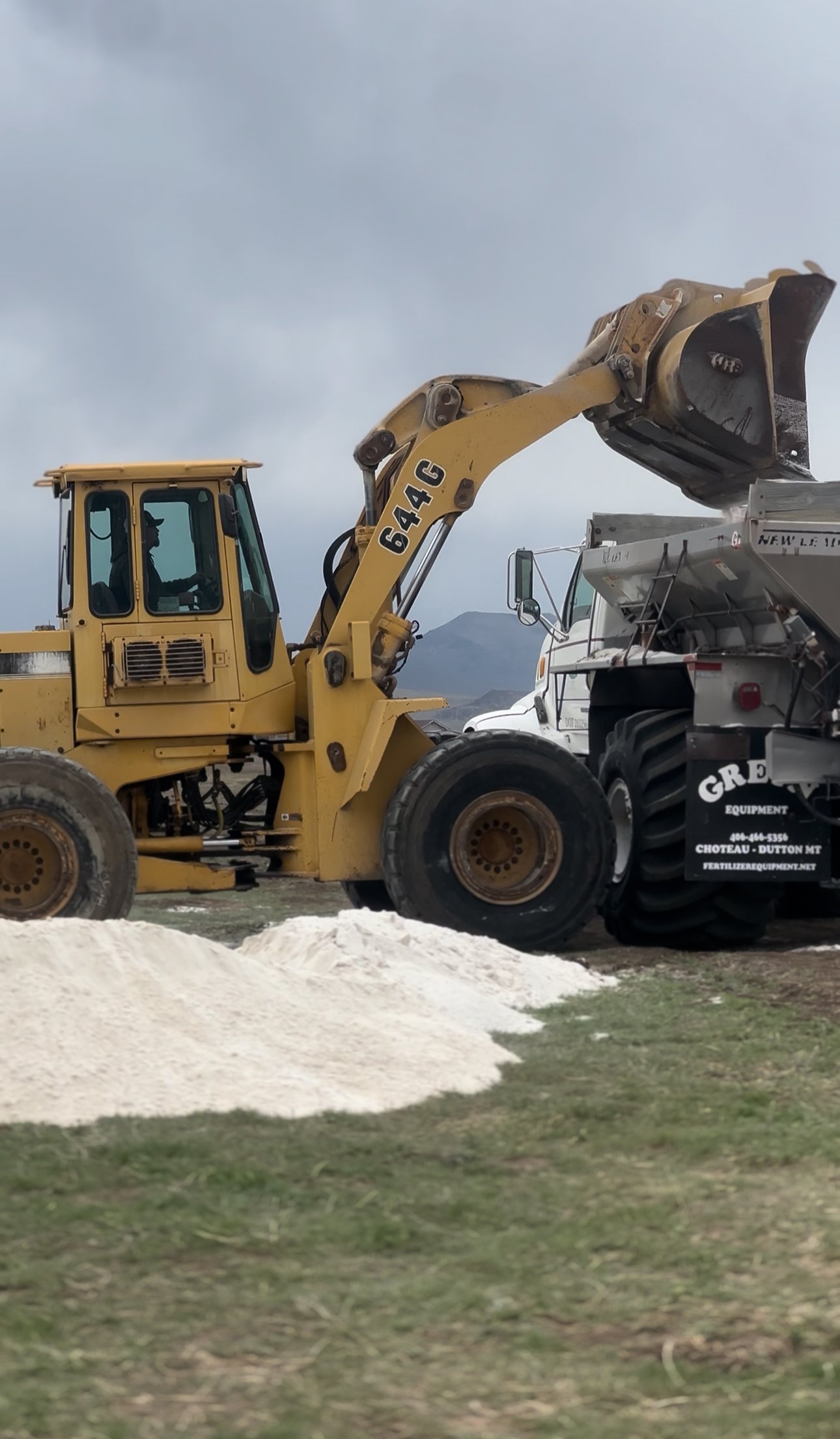
Jon is loading the spreader with Gypsum to spread onto the field.
